
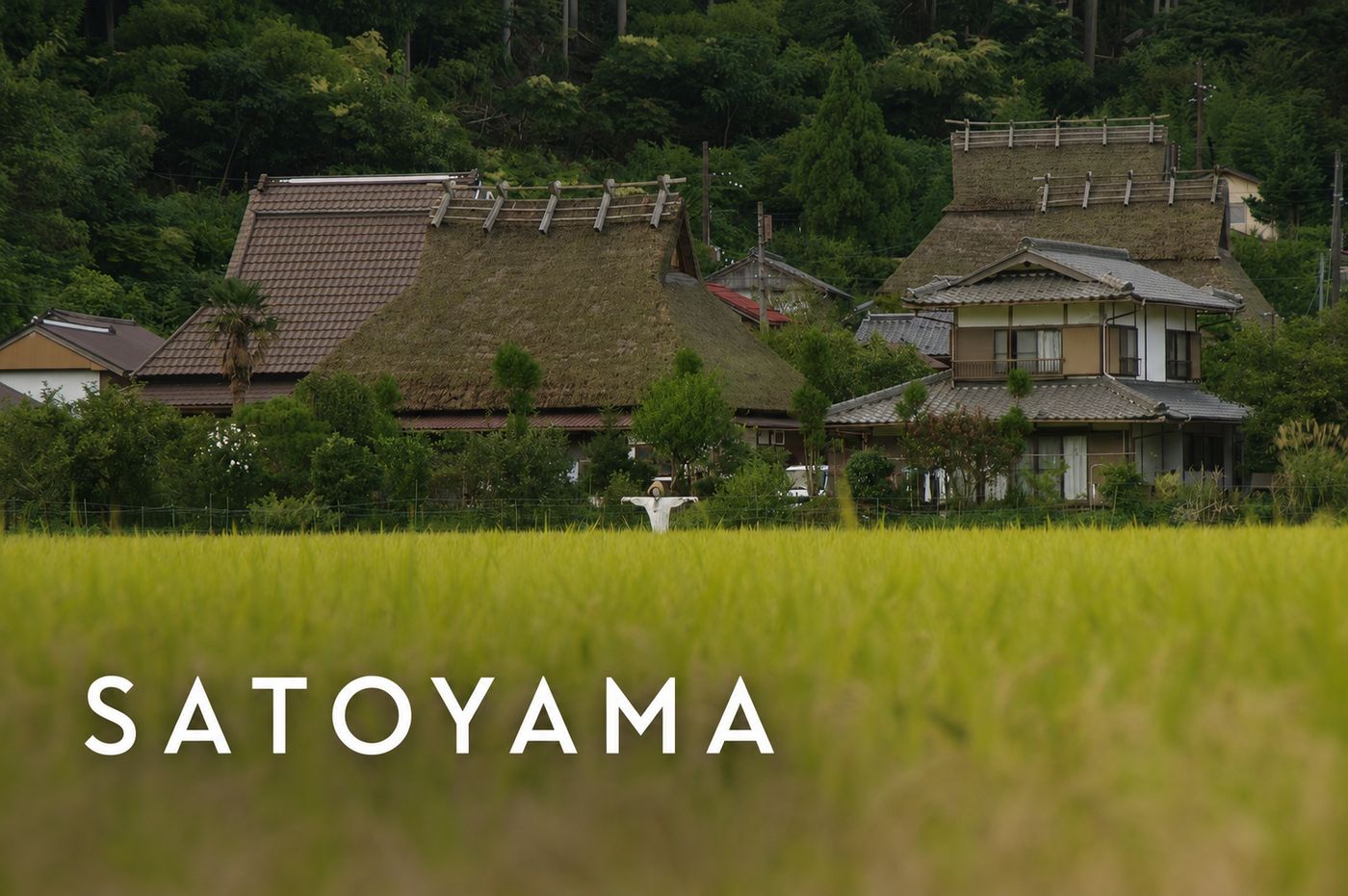
Where people and nature have lived in harmony for centuries
Welcome to Miyama, one of the best places to experience traditional Japanese
SATOYAM landscape. There is no exact English word for SATOYAMA, so let me explain it briefly.
SATOYAM refers to a special environment where people and nature have lived in harmony for centuries. In the past, local people carefully managed the land.
They used the forests, fields, and grasslands in a sustainable way.
For example, they collected firewood for energy, used grass to make thatched roofs, and grew food from the land.
At the same time, these human activities helped maintain rich biodiversity, allowing many plants and animals coexist.
However, this balanced system is now changing.
Today, fewer people take care of the land, because of aging populations and lifestyle changes. As a result, it has become difficult even to grow and collect the grass needed for these traditional thatched roofs.
There is not enough grass available in Miyama and the surrounding areas, so most of the thatching grass used for these roofs is now brought from Kyushu in southern Japan.
Another issue is wildlife.
In the past, regular human activity kept animals like deer, wild boars, and even bears away from villages. But now, as forests become less managed and SATOYAMA areas turn into overgrown forest (bushy)
The buffer zone between the mountains and villages is disappearing, so that
animals are coming closer to human settlements, causing damage to farms and sometimes can be dangerous to people.
In Japan these days, bears are appearing in villages and even in cities almost every day. They damage farms and fields, attack people, and in some cases,
people are even killed by bears.
Even with these challenges, SATOYAMA is now being valued again. Places like Miyama are important not only for their beautiful scenery, but also as examples of sustainable living. They remind us how humans and nature can support each other.
Today, preserving SATOYAMA is not just about protecting the past—it is about creating a sustainable future where people and nature can live together once again.”